By Kathryn Washburn Breighner
This is a treasured family recipe. I cut it out of the Detroit Free Press years ago and have no clue what drew me to this odd blend of ingredients. It was called "Clare Mackey Stew" after the wife of a Michigan politician.
When our sons were in school, we would haul gallons of this to ski meets and it would wow people. Everyone called it a chili. No one could guess the secret ingredient: apples.
Once or twice a year, a friend will ask for the recipe for "Clare Mackey" as it was affectionately called at the ski meets. We would show up for the tailgate party and people would ask "Did you bring Clare Mackey?" It's that good.
½ pound dried red kidney beans
1 lb. pound breakfast sausage
1 large onion, chopped
3 large garlic cloves, minced
2 large Granny Smith apples, cored, unpeeled, cut into 1 inch chunks
½ cup packed dark brown sugar
3 T chili powder
1 ½ t dried mustard
15 oz. tomato sauce
sour cream for garnish
Soak kidney beans overnight. Drain, cover with water and cook over low heat until the skin begins to break but the beans are still slightly hard. Drain beans reserving 2 cups of the liquid.
In a large heavy pot, brown breakfast sausage breaking into 1" pieces. When the sausage is pink, add the chopped onion. Continue to brown the sausage; drain off any fat. Add to the pot, the beans, the garlic, apples, sugar, chili powder, mustard, tomato sauce, reserved bean liquid, and salt and pepper to taste. Simmer, uncovered, stirring occasionally for 60-75 minutes or until apples are softened and the chili is thick.
Three Siblings In The Kitchen
All about food and three siblings who love to spend time in the kitchen.
Saturday, January 28, 2012
Sunday, January 15, 2012
Spanish Judion Beans from Avila
By Kathryn Washburn Breighner
Several years ago, we were making a dish with kidney beans and the only kind available at our local grocery store was a somewhat pricey Michigan grown bean. It was outstanding and for the first time, we understood the difference in dried beans.
We were in Avila, Spain a few months ago, a walled city in a region known for their dried beans. I brought back 2 kilos of them, a large lima and a kidney bean. Today, I prepared a tapas-like lima bean dish similar to a tapas we had in Spain. We were wowed by the beans: huge, meaty, sweet, fabulous. We won't be buying generic dried beans again. There are no words to describe how spectacular these beans are.
For this dish, I soaked 1 c of the Judion beans for about 6 hours. To a pot, I added the beans covered by 1" of water and:
1/2 large onion, minced
2 garlic cloves, minced
1 bay leaf
several sprigs of fresh thyme
These simmered for 30 minutes.
In a Dutch oven, add:
2 T olive oil, heated, then mixed with
1/2 c chopped green pepper
1/2 c chopped red pepper
the remaining onion half, chopped
2 cloves garlic, minced
1 qt of canned tomatoes drained (I used tomatoes I canned from my garden)
1 t smoked Spanish paprika
salt and pepper to taste
Bring this to a simmer. To it add the beans and the bean water and spices. Cover and bake at 350 degrees F for 30 minutes. Uncover and continue cooking for 15-20 minutes.
Several years ago, we were making a dish with kidney beans and the only kind available at our local grocery store was a somewhat pricey Michigan grown bean. It was outstanding and for the first time, we understood the difference in dried beans.
We were in Avila, Spain a few months ago, a walled city in a region known for their dried beans. I brought back 2 kilos of them, a large lima and a kidney bean. Today, I prepared a tapas-like lima bean dish similar to a tapas we had in Spain. We were wowed by the beans: huge, meaty, sweet, fabulous. We won't be buying generic dried beans again. There are no words to describe how spectacular these beans are.
For this dish, I soaked 1 c of the Judion beans for about 6 hours. To a pot, I added the beans covered by 1" of water and:
1/2 large onion, minced
2 garlic cloves, minced
1 bay leaf
several sprigs of fresh thyme
These simmered for 30 minutes.
In a Dutch oven, add:
2 T olive oil, heated, then mixed with
1/2 c chopped green pepper
1/2 c chopped red pepper
the remaining onion half, chopped
2 cloves garlic, minced
1 qt of canned tomatoes drained (I used tomatoes I canned from my garden)
1 t smoked Spanish paprika
salt and pepper to taste
Bring this to a simmer. To it add the beans and the bean water and spices. Cover and bake at 350 degrees F for 30 minutes. Uncover and continue cooking for 15-20 minutes.
Sunday, January 8, 2012
Cranberry Apple Pecan Pie
By Kathryn Washburn Breighner
I love cranberries and am excited each fall when fresh ones appear in the grocery stores. Cranberries are too good for just the holiday season so I stash several bags in the freezer. Many grocery stores now carry frozen cranberries year 'round--as well they should.
Because we're pie people in our family, a variety of pies come out of our ovens. This cranberry, apple and pecan pie has a great blend of flavors from the sweet apples and the tart cranberries mixed with the pecans. This one's a keeper!
In our family, pies always start with home made crust. If you have to succumb to the grocery store version, so be it, but truly, making a crust is easy.We had an abundance of apples in our orchard this year and still have a supply stored in a cool spot. For this pie, I used three different varieties--because I have them--and for apple pies, I prefer to blend two or three varieties.
Mix together:
5 c chopped, peeled apples
1 1/2 c fresh or frozen cranberries
3/4 c chopped pecans
1 c sugar
1/4 c flour
1 t cinnamon
Pour the fruit mixture into a pie plate lined with a crust. Cover with a top crust and bake for 10 minutes at 425 degrees F and then reduce the heat to 355 degrees F and bake for 40-45 minutes until the top is golden brown.
I love cranberries and am excited each fall when fresh ones appear in the grocery stores. Cranberries are too good for just the holiday season so I stash several bags in the freezer. Many grocery stores now carry frozen cranberries year 'round--as well they should.
Because we're pie people in our family, a variety of pies come out of our ovens. This cranberry, apple and pecan pie has a great blend of flavors from the sweet apples and the tart cranberries mixed with the pecans. This one's a keeper!
In our family, pies always start with home made crust. If you have to succumb to the grocery store version, so be it, but truly, making a crust is easy.We had an abundance of apples in our orchard this year and still have a supply stored in a cool spot. For this pie, I used three different varieties--because I have them--and for apple pies, I prefer to blend two or three varieties.
Mix together:
5 c chopped, peeled apples
1 1/2 c fresh or frozen cranberries
3/4 c chopped pecans
1 c sugar
1/4 c flour
1 t cinnamon
Pour the fruit mixture into a pie plate lined with a crust. Cover with a top crust and bake for 10 minutes at 425 degrees F and then reduce the heat to 355 degrees F and bake for 40-45 minutes until the top is golden brown.
Monday, December 26, 2011
Linzer Torte
By Kathryn Washburn Breighner
Linzer torte is the Christmas dessert at our house. This torte originated in Linz, Austria and is a golden brown torte filled with raspberry preserves and topped with a woven crust. It's very easy to make, so easy that I am not sure why this is a once-a-year treat! I cut this recipe out of a (now deceased) Gourmet magazine in 1979.
The crust is a simple one of egg, sugars, baking powder, flour and crushed toasted almonds. The almonds give this dessert its distinctive flavor.
To start, toast some almonds in a 350 degree F oven then grind in a food processor. 2/3 c of ground almonds is needed.
In a mixing bowl, cream until light:
1 stick softened butter
1/2 c packed light brown sugar
1/4 c white sugar
Add:
1 egg and the ground almonds
Then add and combine well:
1 1/2 c flour
1/4 t salt
1/2 t cinnamon
3/4 t baking powder
In a 8 x 8" greased baking pan, press 2/3 of the dough. If the dough is sticky, grease a spatula to help spread the dough. Place the remaining dough between wax paper and roll with a rolling pin to a shape about the size of the baking pan. The dough will be very thin. Put the dough in the freezer for about 5 minutes.
While the dough is chilling, mix 3/4 c of raspberry preserves with 1 t grated lemon peel and spread on the dough in the pan. Remove the chilled dough and cut into 10 strips and place them on top of the dough. Bake at 350 degrees F for 25-30 minutes. Cool and top with sifted powder sugar.
Linzer torte is the Christmas dessert at our house. This torte originated in Linz, Austria and is a golden brown torte filled with raspberry preserves and topped with a woven crust. It's very easy to make, so easy that I am not sure why this is a once-a-year treat! I cut this recipe out of a (now deceased) Gourmet magazine in 1979.
The crust is a simple one of egg, sugars, baking powder, flour and crushed toasted almonds. The almonds give this dessert its distinctive flavor.
In a mixing bowl, cream until light:
1 stick softened butter
1/2 c packed light brown sugar
1/4 c white sugar
Add:
1 egg and the ground almonds
Then add and combine well:
1 1/2 c flour
1/4 t salt
1/2 t cinnamon
3/4 t baking powder
While the dough is chilling, mix 3/4 c of raspberry preserves with 1 t grated lemon peel and spread on the dough in the pan. Remove the chilled dough and cut into 10 strips and place them on top of the dough. Bake at 350 degrees F for 25-30 minutes. Cool and top with sifted powder sugar.
Thursday, December 1, 2011
Making Sauerkraut in a Jar
By Kathryn Washburn Breighner
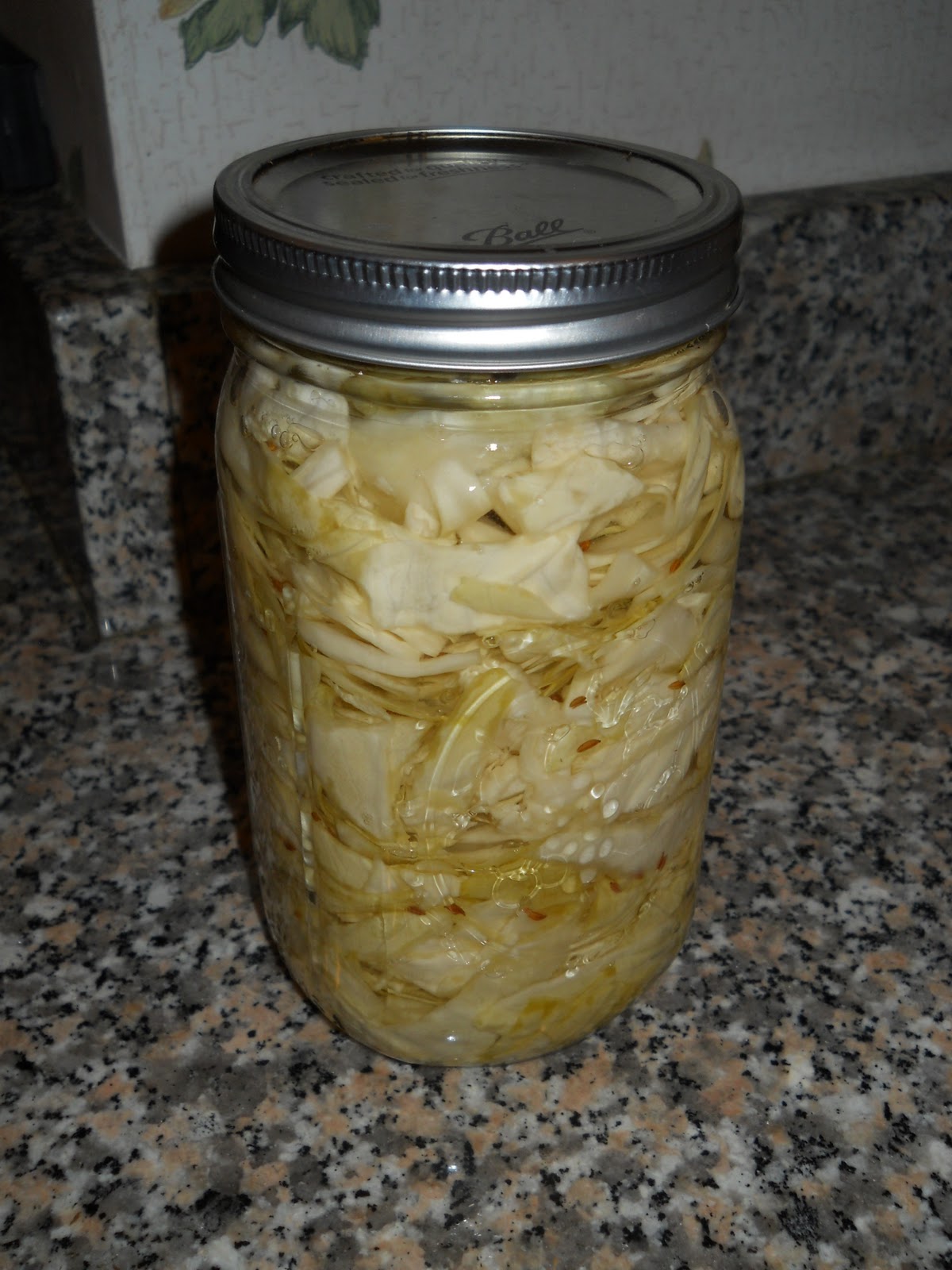
A month or so ago, I listened to a food show on making sauerkraut that recommended a 21-day 'curing' period. We were heading to Europe within the next 21 days and I wouldn't be here to tend to the curing kraut and while in Berlin, I had some fresh kraut. And I knew I had to do this.
Easy? You bet. And the flavors are unlike those found in the grocery store. All it takes is cabbage, seasonings like caraway, salt, water and something to put the mixture in. I chose to make the sauerkraut in quart jars but this can also be done in a large ceramic crock. One disadvantage of making this in the jars is that it takes some time to pack the cabbage into the jars.
For my kraut, I diced 2 heads of cabbage into small dice and tossed with 1 T salt and let sit for several hours. To this I added 3 T caraway seeds and then packed tightly into quart canning jars. I used the flat end of my rolling pen to compress the cabbage. To some of the cabbage, I added chopped apples (our orchards went crazy this year!), onions, and fennel seeds.
Next comes salt water, 1 T to a quart and poured over the chopped cabbage in the jars until the liquid covers the cabbage. Finally, I topped the mixture with a leaf of cabbage. This leaf doesn't have to be covered with liquid but its presence prevents the build up of harmful bacteria. The jars were closed with a canning jar lid and ring.
What happens over the next few weeks is called fermentation. Every 4-5 days, I loosened the lids. What a surprise! A great deal of pressure built up in the jars. I placed the jars on paper towels in a baking pan kept in a room temperature space. More than once, the brew inside the jars spilled out of the jars. Those jars were at work!
This week, 21 days after I packed the kraut, we had the first jar which I rinsed and drained twice and then cooked with onions, carrots, and chicken stock. It is still crunchy and oh, so tasty. Now what to do with my jars? Two choices: they can stay in the refrigerator for six months or they can be canned. I will put some in the refrigerator and can the the rest for gifts. I did two rounds of kraut making and have nine quart jars of this glorious stuff.
An alternate method to making kraut would be the traditional method of placing the cabbage in a crock and covering with the salt water brine and then topping with a plate and a heavy object like a brick to compress the kraut. Once the 21 days have passed, the kraut can then be placed in jars to refrigerate or can. I tasted my kraut several times during the three weeks of brining and at 21 days, the flavors were intense. The kraut can continue to cure beyond the 21 days, up to 6 weeks.
Easy? You bet. And the flavors are unlike those found in the grocery store. All it takes is cabbage, seasonings like caraway, salt, water and something to put the mixture in. I chose to make the sauerkraut in quart jars but this can also be done in a large ceramic crock. One disadvantage of making this in the jars is that it takes some time to pack the cabbage into the jars.
For my kraut, I diced 2 heads of cabbage into small dice and tossed with 1 T salt and let sit for several hours. To this I added 3 T caraway seeds and then packed tightly into quart canning jars. I used the flat end of my rolling pen to compress the cabbage. To some of the cabbage, I added chopped apples (our orchards went crazy this year!), onions, and fennel seeds.
Next comes salt water, 1 T to a quart and poured over the chopped cabbage in the jars until the liquid covers the cabbage. Finally, I topped the mixture with a leaf of cabbage. This leaf doesn't have to be covered with liquid but its presence prevents the build up of harmful bacteria. The jars were closed with a canning jar lid and ring.
This week, 21 days after I packed the kraut, we had the first jar which I rinsed and drained twice and then cooked with onions, carrots, and chicken stock. It is still crunchy and oh, so tasty. Now what to do with my jars? Two choices: they can stay in the refrigerator for six months or they can be canned. I will put some in the refrigerator and can the the rest for gifts. I did two rounds of kraut making and have nine quart jars of this glorious stuff.
An alternate method to making kraut would be the traditional method of placing the cabbage in a crock and covering with the salt water brine and then topping with a plate and a heavy object like a brick to compress the kraut. Once the 21 days have passed, the kraut can then be placed in jars to refrigerate or can. I tasted my kraut several times during the three weeks of brining and at 21 days, the flavors were intense. The kraut can continue to cure beyond the 21 days, up to 6 weeks.
Friday, September 30, 2011
Applesauce Paperweights!
By Kathryn Washburn Breighner
One of the many reasons for cooking is to share the food with friends and family. Sharing food also means sharing with those who don't have food which is what I had in mine this month when our apple orchard produced an abundance of apples.
Because I love to can, I came up with an idea to pick and can our apples into applesauce for the Harbor Springs Food Pantry. This wasn't an easy accomplishment as the Food Pantry required a licensed kitchen, a federally certified canning expert, and appropriate labeling on the jars. The licensed kitchen required liability insurance and a State Health Department certified food safety expert on hand.
All of the hurdles were jumped and 11 of my friends joined me on Monday in the licensed kitchen that is in the same building as the Food Pantry. More than 100 families were at the Food Pantry while we cooked the applesauce--the building smelled heavenly. After six hours of work, we canned 67 quarts of applesauce and put them on the shelves of the Food Pantry.
Then came one more hurdle: while we were canning, Feeding America notified our Food Bank that the State Department of Agriculture wouldn't allow us to donate the applesauce. The Food Safety official actually gave us the wrong reason: she said that Michigan's Cottage Law required a "cannery waiver" for the kitchen we cooked in. Michigan's Cottage Law is for home based businesses, those not in a licensed kitchen, and doesn't allow any canning except for jams and jellies.
When I called the State Agriculture Department, a different story unfolded. To donate or sell canned goods like our applesauce, we needed to be in a kitchen licensed for commercial processing of food. Our kitchen did not have this $175 permit. Our Food Pantry--so excited at what we had done and now devastated at this obstacle--told us they could not give our lovingly prepared applesauce to their clients.
So we changed directions: instead of creating applesauce, we created applesauce paperweights! Yes, paperweights! The Agriculture Department does not control how paperweights are made. The 67 quart jars are labeled "Applesauce TLC Paperweights. This item is intended ONLY for use as a paperweight and is NOT intended for human consumption."
These beautiful paperweights will look wonderful in any home or kitchen. You, too can have one for a donation to the Harbor Springs Food Pantry. The applesauce paperweights are available at two Harbor Springs businesses and are going like hot cakes! Our community is furious that a project that had already met so many rules was not allowed to give this food to the people in our area who need it. While we cannot donate the applesauce, the donated funds from the paperweights will still help the Food Pantry families.
It used to be that we could easily help people. Food should not be wasted when people need it. That was the intent of this project. It didn't work out that this food could be shared but we're helping in a different way with our gorgeous applesauce paperweights. We will do this again--in a kitchen with the right paperwork!
One of the many reasons for cooking is to share the food with friends and family. Sharing food also means sharing with those who don't have food which is what I had in mine this month when our apple orchard produced an abundance of apples.
Because I love to can, I came up with an idea to pick and can our apples into applesauce for the Harbor Springs Food Pantry. This wasn't an easy accomplishment as the Food Pantry required a licensed kitchen, a federally certified canning expert, and appropriate labeling on the jars. The licensed kitchen required liability insurance and a State Health Department certified food safety expert on hand.
Then came one more hurdle: while we were canning, Feeding America notified our Food Bank that the State Department of Agriculture wouldn't allow us to donate the applesauce. The Food Safety official actually gave us the wrong reason: she said that Michigan's Cottage Law required a "cannery waiver" for the kitchen we cooked in. Michigan's Cottage Law is for home based businesses, those not in a licensed kitchen, and doesn't allow any canning except for jams and jellies.
When I called the State Agriculture Department, a different story unfolded. To donate or sell canned goods like our applesauce, we needed to be in a kitchen licensed for commercial processing of food. Our kitchen did not have this $175 permit. Our Food Pantry--so excited at what we had done and now devastated at this obstacle--told us they could not give our lovingly prepared applesauce to their clients.
So we changed directions: instead of creating applesauce, we created applesauce paperweights! Yes, paperweights! The Agriculture Department does not control how paperweights are made. The 67 quart jars are labeled "Applesauce TLC Paperweights. This item is intended ONLY for use as a paperweight and is NOT intended for human consumption."
These beautiful paperweights will look wonderful in any home or kitchen. You, too can have one for a donation to the Harbor Springs Food Pantry. The applesauce paperweights are available at two Harbor Springs businesses and are going like hot cakes! Our community is furious that a project that had already met so many rules was not allowed to give this food to the people in our area who need it. While we cannot donate the applesauce, the donated funds from the paperweights will still help the Food Pantry families.
It used to be that we could easily help people. Food should not be wasted when people need it. That was the intent of this project. It didn't work out that this food could be shared but we're helping in a different way with our gorgeous applesauce paperweights. We will do this again--in a kitchen with the right paperwork!
Sunday, September 11, 2011
Peach Pie--Freezing
By Kathryn Washburn Breighner
Our peach tree is full of ripe peaches so I am making the basics of a peach pie to freeze. This can be done with almost any fruit: it's easy. Just make the pie filling like normal so in this case, I mixed:
6 c peaches
1 1/4 c flour
1 1/4 c sugar

And to the fruit, I added 2 T of Fruit Fresh to hold the peaches in the freezer. Then I poured the mix into a pie plate--no crust--and froze it. When the fruit was frozen, I slid it out of the pie plate into a 1 gallon freezer bag to store.
In the winter, when we want a peach pie, I'll partially thaw the peaches and place in a crust to bake. But I learned something this time: one of the pie plates full of peaches was not frozen solid so when I slid it into the freezer bag, it broke apart. So I took the freezer bag full of peaches and placed it inside the pie plate and froze it in the bag! What a revelation. I should have been doing this for years. Once the bag of fruit was frozen, I removed the pie plate.
Our peach tree is full of ripe peaches so I am making the basics of a peach pie to freeze. This can be done with almost any fruit: it's easy. Just make the pie filling like normal so in this case, I mixed:
6 c peaches
1 1/4 c flour
1 1/4 c sugar
And to the fruit, I added 2 T of Fruit Fresh to hold the peaches in the freezer. Then I poured the mix into a pie plate--no crust--and froze it. When the fruit was frozen, I slid it out of the pie plate into a 1 gallon freezer bag to store.
In the winter, when we want a peach pie, I'll partially thaw the peaches and place in a crust to bake. But I learned something this time: one of the pie plates full of peaches was not frozen solid so when I slid it into the freezer bag, it broke apart. So I took the freezer bag full of peaches and placed it inside the pie plate and froze it in the bag! What a revelation. I should have been doing this for years. Once the bag of fruit was frozen, I removed the pie plate.
Friday, September 2, 2011
Peach Cobbler
By Kathryn Washburn Breighner
We're still swamped with peaches! For this recipe, I picked up a bowl full of peaches from the ground to make this fabulous peach cobbler. I like lots of fruits in my pies, cobblers and crisps and so for any recipe where 4 c of fruit is called for, I add six. For this cobber, I used 8 c because the fruit needs to be used.
To start, bring a bowl of water to a boil and drop the peaches in the water. Using a slotted spoon, remove the peaches after 1 minutes and drop into a bowl or sink of cold water. Remove the skins and the stone and put the cut peaches in an 8 c bowl.
To the bowl of peaches, add and stir together:
1 t cinnamon
2 T brown sugar
2 T flour
1 t vanilla
Pour the peach mixture into a greased baking pan or pie plate. Using the same bowl that the peaches were in (to save on clean up!), add:
1 c flour
3/4 c brown sugar
4 T cold butter
1 t baking powder
1/2 baking soda
a pinch of salt
2 t grated lemon peel
3/4 c buttermilk
Cut the butter into the dry ingredients with a fork or pastry cutter until the pieces of butter and pea size. Stir n the buttermilk and blend quickly. The dough will be wet.
Top the peaches with large dollops of the dough and bake at 425 degree F for 20 minutes. Top with ice cream or yogurt.
To start, bring a bowl of water to a boil and drop the peaches in the water. Using a slotted spoon, remove the peaches after 1 minutes and drop into a bowl or sink of cold water. Remove the skins and the stone and put the cut peaches in an 8 c bowl.
To the bowl of peaches, add and stir together:
1 t cinnamon
2 T brown sugar
2 T flour
1 t vanilla
Pour the peach mixture into a greased baking pan or pie plate. Using the same bowl that the peaches were in (to save on clean up!), add:
3/4 c brown sugar
4 T cold butter
1 t baking powder
1/2 baking soda
a pinch of salt
2 t grated lemon peel
3/4 c buttermilk
Cut the butter into the dry ingredients with a fork or pastry cutter until the pieces of butter and pea size. Stir n the buttermilk and blend quickly. The dough will be wet.
Top the peaches with large dollops of the dough and bake at 425 degree F for 20 minutes. Top with ice cream or yogurt.
Thursday, September 1, 2011
Peach Sorbet
By Kathryn Washburn Breighner
We've been on a peach kick the last few weeks because our peach tree is abundant with delicious fruit. And we've been making lots of sorbet this summer from various fresh fruits like strawberry, blueberry and now peach.
This is an easy dessert to make but takes some planning ahead time as well as freezing time depending on the ice cream maker that you have. Our ice cream maker requires freezing the canister for 24 hours ahead of time so I always keep it in the freezer just in case I want to make a frozen dessert.
First, I went outside and picked a bunch of peaches! Then I boiled some water and dropped the peaches in for about one minute to make it easy to remove the skins. I didn't need a knife; I just peeled the skins away with my fingers.
Into a blender, I put:
6 c peaches
The peaches were blended until creamy. Then I added:
1 c sugar
4 1/2 t lemon juice
4 1/2 t vodka
No, the vodka does not affect the flavor but it does help the sorbet freeze more smoothly and without crystals forming.
The mix was blended for just 10-15 seconds, just until well mixed, and then chilled for 3-4 hours. This is a one container recipe--I blended all the ingredients in the blender and chilled it in the same container.
The peach mix was poured into the ice cream maker and 25 minutes later, a thick peach sorbet was ready. We couldn't wait: we ate some of the soft peach sorbet and then froze the remainder in a plastic container for later use. I will be making more of this to freeze for later--I can just imagine a January night eating this sorbet and thinking of summer!
We've been on a peach kick the last few weeks because our peach tree is abundant with delicious fruit. And we've been making lots of sorbet this summer from various fresh fruits like strawberry, blueberry and now peach.
First, I went outside and picked a bunch of peaches! Then I boiled some water and dropped the peaches in for about one minute to make it easy to remove the skins. I didn't need a knife; I just peeled the skins away with my fingers.
Into a blender, I put:
6 c peaches
The peaches were blended until creamy. Then I added:
1 c sugar
4 1/2 t lemon juice
4 1/2 t vodka
No, the vodka does not affect the flavor but it does help the sorbet freeze more smoothly and without crystals forming.
The peach mix was poured into the ice cream maker and 25 minutes later, a thick peach sorbet was ready. We couldn't wait: we ate some of the soft peach sorbet and then froze the remainder in a plastic container for later use. I will be making more of this to freeze for later--I can just imagine a January night eating this sorbet and thinking of summer!
Wednesday, August 31, 2011
Grilled Peaches
By Kathryn Washburn Breighner
This is such a simple dessert and perfect this time of year when our peach tree is loaded. I have grilled the fruit both outside on the grill and inside in a grill pan. Both are easy. Don't have a grill? No Problem, get out the grill pan and cook the fruit inside.
Plan on 2-3 peaches per person depending on their size--our's our small. Baste the fruit with balsamic vinegar and sprinkle lightly with brown sugar or honey. Grill the peaches 3-4 minutes with the skin side down and then turn over and grill with the fruit side up for another 3-4 minutes.
While the fruit is grilling, get out the ice cream and yogurt!
Sunday, August 28, 2011
Salmorejo Cordobes-Spanish Cold Tomato Soup
By Kathryn Washburn Breighner
Stunning, simply stunning. And simple, too. Gazpacho is not the only cold tomato soup. Our first taste of this soup came via son Nathaniel who lives in Spain. In the Spanish grocery stores, there are large refrigerators filled with cold tomato soups.
This Salmorejo is perfect during summer's tomato season. What sets this soup apart from gazpacho is the ingredient of soaked bread. The Spanish use a lot of olive oil in this soup--I cut it way back from what we'd find in Spain and found this soup to be incredible.
6 c tomatoes--I used many varieties
1 medium onion, chopped,
2 cloves garlic, minced
3 T sherry vinegar
2 T lemon juice
2 c of crumbled white bread like a baguette
1/4 c olive oil plus oil to drizzle over the finished Salmorejo
In a bowl, add 2 c of water and 1 T kosher salt. Add the bread and soak, turning often, for about 30 minutes.
While the bread is soaking, add 3 c tomatoes, 1 1/2 T sherry vinegar, 1/2 of the onion, 1 T lemon juice, and 1 garlic clove to a blender or food processor and process until creamy. Using a slotted spoon, add the bread to the mixture and process again until creamy.
Pour this mixture into a large bowl and add the remaining tomatoes, vinegar, lemon juice, garlic, onion, and salt and pepper to taste. Process until thick and then add the olive oil and process again until it is completely blended.
Add the mixture to the batch in the bowl and mix together. Chill for several hours and when serving, drizzle olive oil over the soup. This can also be topped with chopped hard boiled eggs and slivers of prosciutto.
This Salmorejo is perfect during summer's tomato season. What sets this soup apart from gazpacho is the ingredient of soaked bread. The Spanish use a lot of olive oil in this soup--I cut it way back from what we'd find in Spain and found this soup to be incredible.
6 c tomatoes--I used many varieties
2 cloves garlic, minced
3 T sherry vinegar
2 T lemon juice
2 c of crumbled white bread like a baguette
1/4 c olive oil plus oil to drizzle over the finished Salmorejo
In a bowl, add 2 c of water and 1 T kosher salt. Add the bread and soak, turning often, for about 30 minutes.
While the bread is soaking, add 3 c tomatoes, 1 1/2 T sherry vinegar, 1/2 of the onion, 1 T lemon juice, and 1 garlic clove to a blender or food processor and process until creamy. Using a slotted spoon, add the bread to the mixture and process again until creamy.
Pour this mixture into a large bowl and add the remaining tomatoes, vinegar, lemon juice, garlic, onion, and salt and pepper to taste. Process until thick and then add the olive oil and process again until it is completely blended.
Add the mixture to the batch in the bowl and mix together. Chill for several hours and when serving, drizzle olive oil over the soup. This can also be topped with chopped hard boiled eggs and slivers of prosciutto.
Sunday, August 7, 2011
Basil Water--A Great Summer Drink
By Kathryn Washburn Breighner
Looking for something cool and refreshing to drink in the summer months? Head to the garden or herb pot and harvest some basil.
Put the basil in the bottom of a glass, add ice and water.....and enjoy!
I have a lot of basil right now and this drink makes great use of it and is oh, so tasty. I'm always looking for new ways to use basil and this drink couldn't be easier or better. Cool off with an ice cold glass of basil water!
Looking for something cool and refreshing to drink in the summer months? Head to the garden or herb pot and harvest some basil.Put the basil in the bottom of a glass, add ice and water.....and enjoy!
I have a lot of basil right now and this drink makes great use of it and is oh, so tasty. I'm always looking for new ways to use basil and this drink couldn't be easier or better. Cool off with an ice cold glass of basil water!
Wednesday, August 3, 2011
Grated Zucchini Patties
By Kathryn Washburn Breighner
The last two weeks have been super busy for me so I missed a few zucchini that are now overgrown. No problem: they are perfect for grated zucchini patties. These are super easy and a perfect summer side dish.

Grate a couple of large chunks of zucchini in a food processor to make 4 cups. Put the grated zucchini in a colander, toss with 1 t salt and let drain for 15 minutes. Blot the veggies dry with paper towel and add to a bowl.
To the bowl, add:
1 egg
1 onion, minced
1 green or red pepper, chopped
1 c panko
salt and pepper to taste
Let the mix stand for 5 minutes and then saute in oil over medium high heat until golden brown on both sides. I served them with Greek Yogurt mixed with zatar, a blend of sumac, sesame, and spices. A taste of summer!
Next up: Zucchini Relish!
The last two weeks have been super busy for me so I missed a few zucchini that are now overgrown. No problem: they are perfect for grated zucchini patties. These are super easy and a perfect summer side dish.

Grate a couple of large chunks of zucchini in a food processor to make 4 cups. Put the grated zucchini in a colander, toss with 1 t salt and let drain for 15 minutes. Blot the veggies dry with paper towel and add to a bowl.
To the bowl, add:
1 egg
1 onion, minced
1 green or red pepper, chopped
1 c panko
salt and pepper to taste
Let the mix stand for 5 minutes and then saute in oil over medium high heat until golden brown on both sides. I served them with Greek Yogurt mixed with zatar, a blend of sumac, sesame, and spices. A taste of summer!
Next up: Zucchini Relish!
Sunday, July 10, 2011
Lavender Ginger Lemonade or Limemade
By Kathryn Washburn Breighner
My lavender is just about to bloom and I wanted to use it in a refreshing drink. This fits the bill! This will be the new drink of the summer at our house.
In a saucepan, add:
8 c water
2 T chopped ginger
4 T lavender buds--I just dropped in the trimmed, top part of the lavender with buds
Bring to a simmer. Turn off the heat, steep 15 minutes, then strain the liquid. The liquid will smell wonderful and be brownish in color. Cool completely.
In a pitcher, add 2 cans of lemonade or limeade frozen concentrate and the cooled liquid and mix together. To a blender, add 4 C of ice cubes and about 1/3 of the ade mix. Crush the ice and pour into the pitcher.
Serve over crushed ice or ice cubes and enjoy. This was a wonderful surprise at our house today!
My lavender is just about to bloom and I wanted to use it in a refreshing drink. This fits the bill! This will be the new drink of the summer at our house.
In a saucepan, add:
8 c water
2 T chopped ginger
4 T lavender buds--I just dropped in the trimmed, top part of the lavender with buds
Bring to a simmer. Turn off the heat, steep 15 minutes, then strain the liquid. The liquid will smell wonderful and be brownish in color. Cool completely.
In a pitcher, add 2 cans of lemonade or limeade frozen concentrate and the cooled liquid and mix together. To a blender, add 4 C of ice cubes and about 1/3 of the ade mix. Crush the ice and pour into the pitcher.
Serve over crushed ice or ice cubes and enjoy. This was a wonderful surprise at our house today!
Saturday, July 9, 2011
Strawberry Sorbet
By Kathryn Washburn Breighner
The fresh strawberry season is waning and I've done a number of strawberry desserts: strawberry rhubarb pie, and fresh strawberries with scones are two of the favorites. But it's hot today so I decided to do something cool. The farmers market had several vendors with strawberries today so I brought home quart with sorbet in mind.
This is so easy!
To a blender, add:
1 qt, about 4 c, strawberries
1/2 c very cold water
Blend only about 30-45 seconds so that there are still chunks of fruit in the mixture.
Pour into a bowl and add:
1 c sugar
1 T lemon juice
1 T vodka--I used grapefruit vodka. The vodka is important; it adds no alcohol taste but keeps the sorbet from forming crystals as it freezes. The vodka is the key to smooth sorbet.
Chill 3-4 hours until completely cold. Pour into an ice cream maker and follow directions. My ice cream maker has a canister that is frozen before using it and the liquid is poured into the chilled container and churned by the machine. It takes about 20 minutes.
Scoop the sorbet into a freezing container, cover and freeze for 1-2 hours before serving. Perfect!
The fresh strawberry season is waning and I've done a number of strawberry desserts: strawberry rhubarb pie, and fresh strawberries with scones are two of the favorites. But it's hot today so I decided to do something cool. The farmers market had several vendors with strawberries today so I brought home quart with sorbet in mind.
This is so easy!
To a blender, add:
1 qt, about 4 c, strawberries
1/2 c very cold water
Blend only about 30-45 seconds so that there are still chunks of fruit in the mixture.
Pour into a bowl and add:
1 c sugar
1 T lemon juice
1 T vodka--I used grapefruit vodka. The vodka is important; it adds no alcohol taste but keeps the sorbet from forming crystals as it freezes. The vodka is the key to smooth sorbet.
Chill 3-4 hours until completely cold. Pour into an ice cream maker and follow directions. My ice cream maker has a canister that is frozen before using it and the liquid is poured into the chilled container and churned by the machine. It takes about 20 minutes.
Scoop the sorbet into a freezing container, cover and freeze for 1-2 hours before serving. Perfect!
Wednesday, June 29, 2011
Jicama, radish, cucumber, carrot summer salad
By Kathryn Washburn Breighner
This is super simple, fresh, and tasty.
Mix together:
1 medium jicama, peeled, cut sliced into strips
2 carrots, chopped
1 medium cucumber, chopped
15-20 radishes, chopped
In a small saucepan, bring to a simmer, stirring, 1/2 c rice wine vinegar, 1 t sugar, and 1/2 t pepper flakes. Pour the vinegar mixture over the vegetables, season with salt and pepper to taste and blend. Chill at least 2 hours before serving, stirring often to blend the flavors.
This is super simple, fresh, and tasty.
Mix together:
1 medium jicama, peeled, cut sliced into strips
2 carrots, chopped
1 medium cucumber, chopped
15-20 radishes, chopped
In a small saucepan, bring to a simmer, stirring, 1/2 c rice wine vinegar, 1 t sugar, and 1/2 t pepper flakes. Pour the vinegar mixture over the vegetables, season with salt and pepper to taste and blend. Chill at least 2 hours before serving, stirring often to blend the flavors.
Saturday, May 14, 2011
Oven Baked Paella
By Kathryn Washburn Breighner
This was so good that is was a surprise. Each mouthful lead to a "wow". We love paella and have saffron, smoked paprika, and Spanish Bomba rice in the pantry and we've mastered and enjoy a stove top paella.
But this oven baked version really carries a lot of flavor and it allowed for the development of the coveted paella crust, or soccarat, on the bottom. The texture of the rice was quite different that the stove top version and nicely absorbed the broth. And it's easy!
Here is how it went together:
In a Dutch oven, brown 4-6 chicken thighs and legs in 2 T olive oil. Season them with salt and pepper and 1/2 t smoked paprika.
Remove the chicken and add to the Dutch oven:
1 med onion, chopped,
2 gloves garlic minced
Saute the onion and garlic until the onion begins to soften, about five minutes. Add to the Dutch oven:
1/2 pound spicy sausage sliced into 1/4" rounds. I used Andouille but chorizo or another sausage that is spicy would be great. Cook for another 3-4 minutes.
Add to the mixture:
1 c chopped, drained canned tomatoes
2 c chicken broth
1/4 t saffron threads
1/2 t smoked paprika
Bring mixture to a simmer and add:
1 c Arborio or Bomba rice
The chicken pieces
Put the Dutch oven in a 350 degree F oven and bake 20-25 minutes until the liquid is absorbed. Do not stir to disturb the crust that develops on the bottom. Serve with some Spanish wine or a good, cold beer and enjoy!
This was so good that is was a surprise. Each mouthful lead to a "wow". We love paella and have saffron, smoked paprika, and Spanish Bomba rice in the pantry and we've mastered and enjoy a stove top paella.
But this oven baked version really carries a lot of flavor and it allowed for the development of the coveted paella crust, or soccarat, on the bottom. The texture of the rice was quite different that the stove top version and nicely absorbed the broth. And it's easy!
Here is how it went together:
In a Dutch oven, brown 4-6 chicken thighs and legs in 2 T olive oil. Season them with salt and pepper and 1/2 t smoked paprika.
Remove the chicken and add to the Dutch oven:
1 med onion, chopped,
2 gloves garlic minced
Saute the onion and garlic until the onion begins to soften, about five minutes. Add to the Dutch oven:
1/2 pound spicy sausage sliced into 1/4" rounds. I used Andouille but chorizo or another sausage that is spicy would be great. Cook for another 3-4 minutes.
Add to the mixture:
1 c chopped, drained canned tomatoes
2 c chicken broth
1/4 t saffron threads
1/2 t smoked paprika
Bring mixture to a simmer and add:
1 c Arborio or Bomba rice
The chicken pieces
Put the Dutch oven in a 350 degree F oven and bake 20-25 minutes until the liquid is absorbed. Do not stir to disturb the crust that develops on the bottom. Serve with some Spanish wine or a good, cold beer and enjoy!
Wednesday, March 30, 2011
Kale Chips
By Kathryn Washburn Breighner
I have read about kale chips for awhile but the concept didn't click with me. I bought kale a few days ago and wanted a new recipe. So I did kale chips. Outstanding! This will be often repeated.
And they couldn't be easier. I washed a bunch of kale and tore them into 3-4" pieces and put them into a deep bowl. I had about 8 cups of torn pieces.
In a small bowl, I blended about 3 T olive oil, 1 T cider vinegar, sea salt and pepper and poured them over the kale pieces. Using my hands, I tossed and tossed and tossed the kale so that each piece was well coated.
Using 2 cookie sheets lined with Silpat baking sheets (or aluminum foil), I spread out the kale pieces, and put them into a 350 degree F oven. Within 5 minutes, the kale began wilting and after 20 minutes, the edges were turning brown. They came out of the oven crisp and oh, so tasty!
These are great warm or at room temperature. What a treat.
Sunday, February 27, 2011
Ginger Snaps or Molasses Cookies
By Kathryn Washburn Breighner
We grew up with these cookies. On each camping trip with Aunt Dottie, she brought these cookies. After not making them for years, I made a batch a few months ago and then again this weekend. They are really tasty and very easy to make. Dottie called them molasses cookies but they are the same as a ginger snap. I updated them with a couple of chunks of crystallized ginger in each cookie.
Dottie's recipe uses shortening. Butter can be used instead but it will make them a little less puffy and a little browner. These are wonderful with butter, too.
Cream in a stand mixer:
3/4 c shortening
1 c sugar
Add in:
1/4 c molasses
1 egg
Gradually add in:
2 c flour
2 t baking soda
1 t cinnamon
1/2 t cloves
1/2 t ginger
1/2 t salt
Mix until the dough just begins to pull away from the side of the bowl. Roll into 1" balls and add in ginger chunks, if desired. Roll the balls into a sugar. Bake at 375 degrees F for 8-10 minutes until the tops of the cookies slightly crack and just begin to brown. This makes 18 cookies.
We grew up with these cookies. On each camping trip with Aunt Dottie, she brought these cookies. After not making them for years, I made a batch a few months ago and then again this weekend. They are really tasty and very easy to make. Dottie called them molasses cookies but they are the same as a ginger snap. I updated them with a couple of chunks of crystallized ginger in each cookie.
Dottie's recipe uses shortening. Butter can be used instead but it will make them a little less puffy and a little browner. These are wonderful with butter, too.
Cream in a stand mixer:
3/4 c shortening
1 c sugar
Add in:
1/4 c molasses
1 egg
Gradually add in:
2 c flour
2 t baking soda
1 t cinnamon
1/2 t cloves
1/2 t ginger
1/2 t salt
Mix until the dough just begins to pull away from the side of the bowl. Roll into 1" balls and add in ginger chunks, if desired. Roll the balls into a sugar. Bake at 375 degrees F for 8-10 minutes until the tops of the cookies slightly crack and just begin to brown. This makes 18 cookies.
Thursday, February 3, 2011
Cottage Cheese (Ricotta) Cake
By Kathryn Washburn Breighner
My friend Sherry mentioned a family cheesecake recipe that has passed down through several generations. I love family recipes so I asked her for it. And I'm so glad I did--what a great recipe.
A few generations ago, Sherry's grandmother made this cheesecake with dry cottage cheese which was pressed through a sieve. Now it is made with ricotta. There is a secret ingredient to this recipe: crushed pineapple. No, this is not a pineapple cheesecake. The pineapple is so subtle that if you don't know it is there, you can't identify the unique flavors. The pineapple adds sweetness and texture.
This is a simple recipe and the refrigerated cheesecake gets better each day (if it lasts that long!).
For the crust and crumb topping:
1 lb graham crackers, crushed
1 stick melted butter
1/4 c sugar
Blend these together with a fork. Reserve 1/4 c of the crumbs. Press the crumbs into 2 9-inch pie plates or 1 9x13 baking pan.
For the filling:
Mix together:
2 lbs ricotta cheese
4 eggs
1 c sugar
8 oz evaporated milk
1 c drained crushed pineapple (in heavy syrup)
Pour the filling into the pie plates or pan. Sprinkle the remaining crumbs on the top. Drain a small bottle of maraschino cherries and place the cherries on the cheesecake.
Bake at 350 degrees F for 45-50 minutes or until the center jiggles but is not firm. Cool to room temperature and then refrigerate for several hours before serving.
Enjoy!
My friend Sherry mentioned a family cheesecake recipe that has passed down through several generations. I love family recipes so I asked her for it. And I'm so glad I did--what a great recipe.
A few generations ago, Sherry's grandmother made this cheesecake with dry cottage cheese which was pressed through a sieve. Now it is made with ricotta. There is a secret ingredient to this recipe: crushed pineapple. No, this is not a pineapple cheesecake. The pineapple is so subtle that if you don't know it is there, you can't identify the unique flavors. The pineapple adds sweetness and texture.
This is a simple recipe and the refrigerated cheesecake gets better each day (if it lasts that long!).
For the crust and crumb topping:
1 lb graham crackers, crushed
1 stick melted butter
1/4 c sugar
Blend these together with a fork. Reserve 1/4 c of the crumbs. Press the crumbs into 2 9-inch pie plates or 1 9x13 baking pan.
For the filling:
Mix together:
2 lbs ricotta cheese
4 eggs
1 c sugar
8 oz evaporated milk
1 c drained crushed pineapple (in heavy syrup)
Pour the filling into the pie plates or pan. Sprinkle the remaining crumbs on the top. Drain a small bottle of maraschino cherries and place the cherries on the cheesecake.
Bake at 350 degrees F for 45-50 minutes or until the center jiggles but is not firm. Cool to room temperature and then refrigerate for several hours before serving.
Enjoy!
Monday, January 24, 2011
Baked Oatmeal with Fruit & Nuts
By Kathryn Washburn Breighner
I start most days with oatmeal in some fashion: slow cooked (old fashioned only), muesli, or granola (the last 2 homemade, of course). Today I tried something new and it will now be added to my oatmeal menu: baked oatmeal.
This is simple to do: it's just milk, oatmeal and fruit baked for 30 minutes. It is thick and creamy and leftovers can be refrigerated and reheated in the microwave.
Heat in the microwave for 3 minutes:
3 1/2 c milk
1/2 c sweetener of choice such as brown sugar, honey or maple sypup
Lightly oil a casserole dish and to it add:
The milk and sugar mixture
1 1/2 c whole oats
Dash of salt
2 t vanilla
2 t cinnamon
1/2 c dried fruit such as raisins, cherries or cranberries
1/2 c chopped nuts such as walnuts, pecans or almonds
1 apple or pear, peeled and cored and cut into bite size pieces
Bake the mixture, covered, for 30 minutes. Stir and serve. The oatmeal will still have some liquid to it but that will be absorbed as it cools. Really tasty!
I start most days with oatmeal in some fashion: slow cooked (old fashioned only), muesli, or granola (the last 2 homemade, of course). Today I tried something new and it will now be added to my oatmeal menu: baked oatmeal.
This is simple to do: it's just milk, oatmeal and fruit baked for 30 minutes. It is thick and creamy and leftovers can be refrigerated and reheated in the microwave.
Heat in the microwave for 3 minutes:
3 1/2 c milk
1/2 c sweetener of choice such as brown sugar, honey or maple sypup
Lightly oil a casserole dish and to it add:
The milk and sugar mixture
1 1/2 c whole oats
Dash of salt
2 t vanilla
2 t cinnamon
1/2 c dried fruit such as raisins, cherries or cranberries
1/2 c chopped nuts such as walnuts, pecans or almonds
1 apple or pear, peeled and cored and cut into bite size pieces
Bake the mixture, covered, for 30 minutes. Stir and serve. The oatmeal will still have some liquid to it but that will be absorbed as it cools. Really tasty!
Sunday, January 9, 2011
Spaetzle
By Kathryn Washburn Breighner
Our German friends, the Clermonts, have introduced to us real spaetzle and we've come to love it. Thanks to a spaetzle press that they gave us for Christmas, I see lots of Clermont-style spaetzle in our future! My chicken paprikash will be perfect on spaetzle.
This is their recipe:
3 3/4 c flour
5 eggs
Dash of salt
Water as needed
Heat a large pot with water. When it comes to a boil, place the spaetzle press on top of the pan, spoon in some of the dough and slide the press back and forth across the blade of the press. The dough will fall into the boiling water. Quickly, repeat this so that all of the dough is processed into the water within 1-2 minutes.
When the tiny spaetzle rise to the surface of the water, they are done. Pour into a colander. Return the spaetzle to the pot and toss with 1-2 T of olive oil.
Our German friends, the Clermonts, have introduced to us real spaetzle and we've come to love it. Thanks to a spaetzle press that they gave us for Christmas, I see lots of Clermont-style spaetzle in our future! My chicken paprikash will be perfect on spaetzle.
This is their recipe:
3 3/4 c flour
5 eggs
Dash of salt
Water as needed
Mix by hand with a wooden spoon in a large mixing bowl the flour, eggs and salt with a little water. Add water slowly, so that it becomes a smooth, sticky dough. This dough should be beaten by hand for quite a while, until big air bubbles appear. The dough should be smooth, not too liquid and not too tough. Then let it rest for a while in the refrigerator, at least 1-2 hours.
Heat a large pot with water. When it comes to a boil, place the spaetzle press on top of the pan, spoon in some of the dough and slide the press back and forth across the blade of the press. The dough will fall into the boiling water. Quickly, repeat this so that all of the dough is processed into the water within 1-2 minutes.
When the tiny spaetzle rise to the surface of the water, they are done. Pour into a colander. Return the spaetzle to the pot and toss with 1-2 T of olive oil.
Friday, January 7, 2011
Macaroni & Cheese
By Kathryn Washburn Breighner
Tonight, I announced that I was making a frittata for dinner but while on my nightly snowshoe, I had a craving for mac and cheese. When I announced that dinner was ready, Marty was quite surprised to find macaroni and cheese.
I created a version similar to that of Zingerman's Road House in Ann Arbor, voted one of the nation's best. I have a couple of versions of mac and cheese that I like, one baked and one stove top. This is the stove top version--very creamy--and uses a seasoned cast iron skillet to finish off the pasta and cheese sauce. This one is hard to beat for taste and speed. You can have the sauce made while the macaroni cooks and it takes 4-5 minutes to blend them. Easy and tasty.
To a large pot of boiling water, add:
2 T salt
1 pound macaroni
Cook until al dente and drain the pasta.
While the macaroni is cooking, in a saucepan, saute:
1 small onion, chopped,
2 T butter
2 bay leaves
When the onions are soft, 3-4 minutes, remove the bay leaves and add:
1/4 c flour
Stir the flour into the butter for several minutes until the flour is golden.
Slowly add:
1 3/4 c milk
Stir until the mixture is creamy and begins to bubble. Then add:
1/4 c sour cream
Stir until the sour cream is completely mixed in and it begins to bubble. Then add:
2 c grated cheddar--I used 1/2 yellow and 1/2 white cheddar
1 t dijon mustard
1 t salt
pepper to taste
Blend the sauce until all of the cheese is melted and simmer for 4-5 min.
In a cast iron skillet, heat 2 T olive oil until it just begins to smoke. Add the sauce and stir quickly. Then fold in the macaroni and stir for 3-4 minutes until all of the macaroni is coated with cheese sauce and the sauce pulls away from the side of the skillet. Serve hot.
With a salad and some hot bread, this is a perfect dinner on a cold winter night.
Tonight, I announced that I was making a frittata for dinner but while on my nightly snowshoe, I had a craving for mac and cheese. When I announced that dinner was ready, Marty was quite surprised to find macaroni and cheese.
I created a version similar to that of Zingerman's Road House in Ann Arbor, voted one of the nation's best. I have a couple of versions of mac and cheese that I like, one baked and one stove top. This is the stove top version--very creamy--and uses a seasoned cast iron skillet to finish off the pasta and cheese sauce. This one is hard to beat for taste and speed. You can have the sauce made while the macaroni cooks and it takes 4-5 minutes to blend them. Easy and tasty.
To a large pot of boiling water, add:
2 T salt
1 pound macaroni
Cook until al dente and drain the pasta.
While the macaroni is cooking, in a saucepan, saute:
1 small onion, chopped,
2 T butter
2 bay leaves
When the onions are soft, 3-4 minutes, remove the bay leaves and add:
1/4 c flour
Stir the flour into the butter for several minutes until the flour is golden.
Slowly add:
1 3/4 c milk
Stir until the mixture is creamy and begins to bubble. Then add:
1/4 c sour cream
Stir until the sour cream is completely mixed in and it begins to bubble. Then add:
2 c grated cheddar--I used 1/2 yellow and 1/2 white cheddar
1 t dijon mustard
1 t salt
pepper to taste
Blend the sauce until all of the cheese is melted and simmer for 4-5 min.
In a cast iron skillet, heat 2 T olive oil until it just begins to smoke. Add the sauce and stir quickly. Then fold in the macaroni and stir for 3-4 minutes until all of the macaroni is coated with cheese sauce and the sauce pulls away from the side of the skillet. Serve hot.
With a salad and some hot bread, this is a perfect dinner on a cold winter night.
Wednesday, December 29, 2010
Egg Nog
By Kathryn Washburn Breighner
After making this drink, I wonder why it is considered a holiday drink. It's too good to be enjoyed just once or twice a year. We made this drink for Christmas Day and what a treat it was.
Egg nogs are basically an egg custard drink. While there are recipes for uncooked egg nogs using pasteurized eggs, this cooked version is simple and safe.
For this egg nog, you'll need:
6 eggs separated and at room temperature
1/2 c sugar
1 1/2 c heavy cream
6 c whole milk
5 oz bourbon
1 1/2 t freshly grated nutmeg
Beat the yolks in a stand mixer until they are light in color. Gradually add sugar reserving 1 1/2 T. In a saucepan, combine the milk, cream and 1 t of nutmeg and bring just to a boil using medium heat, stirring often.
Remove the pan from the heat and add 1/2 c of hot milk to eggs and stir. Add another 1/2 c and stir. Add another 1/2 c and stir. This will temper the eggs by slowly add the milk so that the eggs don't curdle. Add the remaining milk to the eggs, blend. Pour the mixture back in the pot and heat slowly until bubbles just begin to form along the edge of the pan. Remove from the heat. Chill. About an hour later, add the bourbon, stir and continue to chill.
Wash and dry the mixing bowl and beat the egg white to soft peaks and gradually add remaining sugar and beat until there are stiff peaks. Whisk the egg whites until the chilled mixture. Chill at least 30 minutes. Sprinkle remaining nutmeg on the eggnog when it is poured into glasses.
Tasty!
After making this drink, I wonder why it is considered a holiday drink. It's too good to be enjoyed just once or twice a year. We made this drink for Christmas Day and what a treat it was.
Egg nogs are basically an egg custard drink. While there are recipes for uncooked egg nogs using pasteurized eggs, this cooked version is simple and safe.
For this egg nog, you'll need:
6 eggs separated and at room temperature
1/2 c sugar
1 1/2 c heavy cream
6 c whole milk
5 oz bourbon
1 1/2 t freshly grated nutmeg
Beat the yolks in a stand mixer until they are light in color. Gradually add sugar reserving 1 1/2 T. In a saucepan, combine the milk, cream and 1 t of nutmeg and bring just to a boil using medium heat, stirring often.
Remove the pan from the heat and add 1/2 c of hot milk to eggs and stir. Add another 1/2 c and stir. Add another 1/2 c and stir. This will temper the eggs by slowly add the milk so that the eggs don't curdle. Add the remaining milk to the eggs, blend. Pour the mixture back in the pot and heat slowly until bubbles just begin to form along the edge of the pan. Remove from the heat. Chill. About an hour later, add the bourbon, stir and continue to chill.
Wash and dry the mixing bowl and beat the egg white to soft peaks and gradually add remaining sugar and beat until there are stiff peaks. Whisk the egg whites until the chilled mixture. Chill at least 30 minutes. Sprinkle remaining nutmeg on the eggnog when it is poured into glasses.
Tasty!
Sunday, November 28, 2010
Hot Buttered Rum Mix
By Perry Washburn
This is a classic in our house; the kids ask for it every holiday season. The kids get this sans rum. The adults get their choice. This came from my Better Homes and Gardens cookbook (1981). If you don't own one, or a Joy of Cooking cookbook, I know what you should be asking Santa for...
1 cup butter or margarine, softened
1 cup packed brown sugar
1/2 cup powdered sugar
1 tsp ground nutmeg (a nutmeg grinder makes a great gift!)
1 tsp ground cinnamon
2 cups vanilla ice cream, softened
Rum
Boiling water
In a small mixer bowl beat together softened butter or margarine, brown sugar, powdered sugar, nutmeg and cinnamon until well combined. Beat in the softened ice cream. Turn mixture into a freezer container. Seal and freeze; mixture will not freeze solid.
To serve, spoon about 1/3 cup of the ice cream into a mug, add 1/2 cup boiling water, and a jigger of rum if desired. Stir well.
This is a classic in our house; the kids ask for it every holiday season. The kids get this sans rum. The adults get their choice. This came from my Better Homes and Gardens cookbook (1981). If you don't own one, or a Joy of Cooking cookbook, I know what you should be asking Santa for...
1 cup butter or margarine, softened
1 cup packed brown sugar
1/2 cup powdered sugar
1 tsp ground nutmeg (a nutmeg grinder makes a great gift!)
1 tsp ground cinnamon
2 cups vanilla ice cream, softened
Rum
Boiling water
In a small mixer bowl beat together softened butter or margarine, brown sugar, powdered sugar, nutmeg and cinnamon until well combined. Beat in the softened ice cream. Turn mixture into a freezer container. Seal and freeze; mixture will not freeze solid.
To serve, spoon about 1/3 cup of the ice cream into a mug, add 1/2 cup boiling water, and a jigger of rum if desired. Stir well.
Sunday, November 7, 2010
Curried Butternut Squash Soup
By Kathryn Washburn Breighner
Perry and I have both been in the kitchen with squash soups, his using buttercup and mine using butternut. In the fall, squash soups are popular as these hearty winter vegetables hold up to a myriad of flavors.
I wanted a savory, curry soup. Many of the squash soup recipes call for cubing the uncooked squash and then simmering in stock. Since I like the sweet flavor that roasting brings to vegetables, I roasted the butternut squash first. I pierced two medium size butternut squash and roasted on a baking sheet at 350 degrees for about 45 minutes until a knife could pierce the squash and come out easily. Then I cut them in half and let them cool.
While they were cooking, I sauteed:
1 medium onion, chopped
2 cloves of garlic, minced, in
3 T olive oil
As the vegetables softened, I added 2 t of curry powder and stirred for a minute (the fragrance that comes from the pan is amazing!). To this pan, I added 1 cup of water and brought to a simmer.
I scooped out the cooked squash and pureed in a food processor. To the squash, I added the water/garlic/curry/water along with 2 1/2 c of water and 3 t of chicken base (Penzey's). Puree until smooth adding more water, if desired, for a thinner soup
Back to the pot went the puree with some salt and pepper and it simmered on low heat for 15 minutes. The soup was served with a dollop of sour cream. Wow!
Perry and I have both been in the kitchen with squash soups, his using buttercup and mine using butternut. In the fall, squash soups are popular as these hearty winter vegetables hold up to a myriad of flavors.
I wanted a savory, curry soup. Many of the squash soup recipes call for cubing the uncooked squash and then simmering in stock. Since I like the sweet flavor that roasting brings to vegetables, I roasted the butternut squash first. I pierced two medium size butternut squash and roasted on a baking sheet at 350 degrees for about 45 minutes until a knife could pierce the squash and come out easily. Then I cut them in half and let them cool.
While they were cooking, I sauteed:
1 medium onion, chopped
2 cloves of garlic, minced, in
3 T olive oil
As the vegetables softened, I added 2 t of curry powder and stirred for a minute (the fragrance that comes from the pan is amazing!). To this pan, I added 1 cup of water and brought to a simmer.
I scooped out the cooked squash and pureed in a food processor. To the squash, I added the water/garlic/curry/water along with 2 1/2 c of water and 3 t of chicken base (Penzey's). Puree until smooth adding more water, if desired, for a thinner soup
Back to the pot went the puree with some salt and pepper and it simmered on low heat for 15 minutes. The soup was served with a dollop of sour cream. Wow!
Monday, October 25, 2010
Buttercup Squash Soup
By Perry Washburn
Carolyn is in a veggie phase, which means we have interesting leftovers. As the king of leftover repurposing, this gives me some fun raw materials.
As I was simmering giblets while smoking a chicken, I came upon a couple of cups of leftover buttercup squash. I remembered a small bag of leftover bacon bits, perhaps a cup. A run to the store for a head of fennel, and I had a plan!
2 Tbs butter
1 whole head of fennel, stems/leafy parts and all, chopped
2-4 cups of stock
2 cups buttercup squash
1 cup bacon bits
Saute the chopped fennel in the butter for 10 minutes, until well wilted. Add the squash, the bacon bits and about half the stock. Bring to a boil then reduce the heat and simmer for another 10 minutes or so. Pour this into a blender and puree. Add more hot stock if it's too thick.
With the flavors of the fennel, stock, squash and bacon, this needed no other spices. A great first course with our smoked chicken!
Carolyn is in a veggie phase, which means we have interesting leftovers. As the king of leftover repurposing, this gives me some fun raw materials.
As I was simmering giblets while smoking a chicken, I came upon a couple of cups of leftover buttercup squash. I remembered a small bag of leftover bacon bits, perhaps a cup. A run to the store for a head of fennel, and I had a plan!
2 Tbs butter
1 whole head of fennel, stems/leafy parts and all, chopped
2-4 cups of stock
2 cups buttercup squash
1 cup bacon bits
Saute the chopped fennel in the butter for 10 minutes, until well wilted. Add the squash, the bacon bits and about half the stock. Bring to a boil then reduce the heat and simmer for another 10 minutes or so. Pour this into a blender and puree. Add more hot stock if it's too thick.
With the flavors of the fennel, stock, squash and bacon, this needed no other spices. A great first course with our smoked chicken!
Tuesday, September 21, 2010
Updated and Fresh Eggplant Parmesan
By Kathryn Washburn Breighner
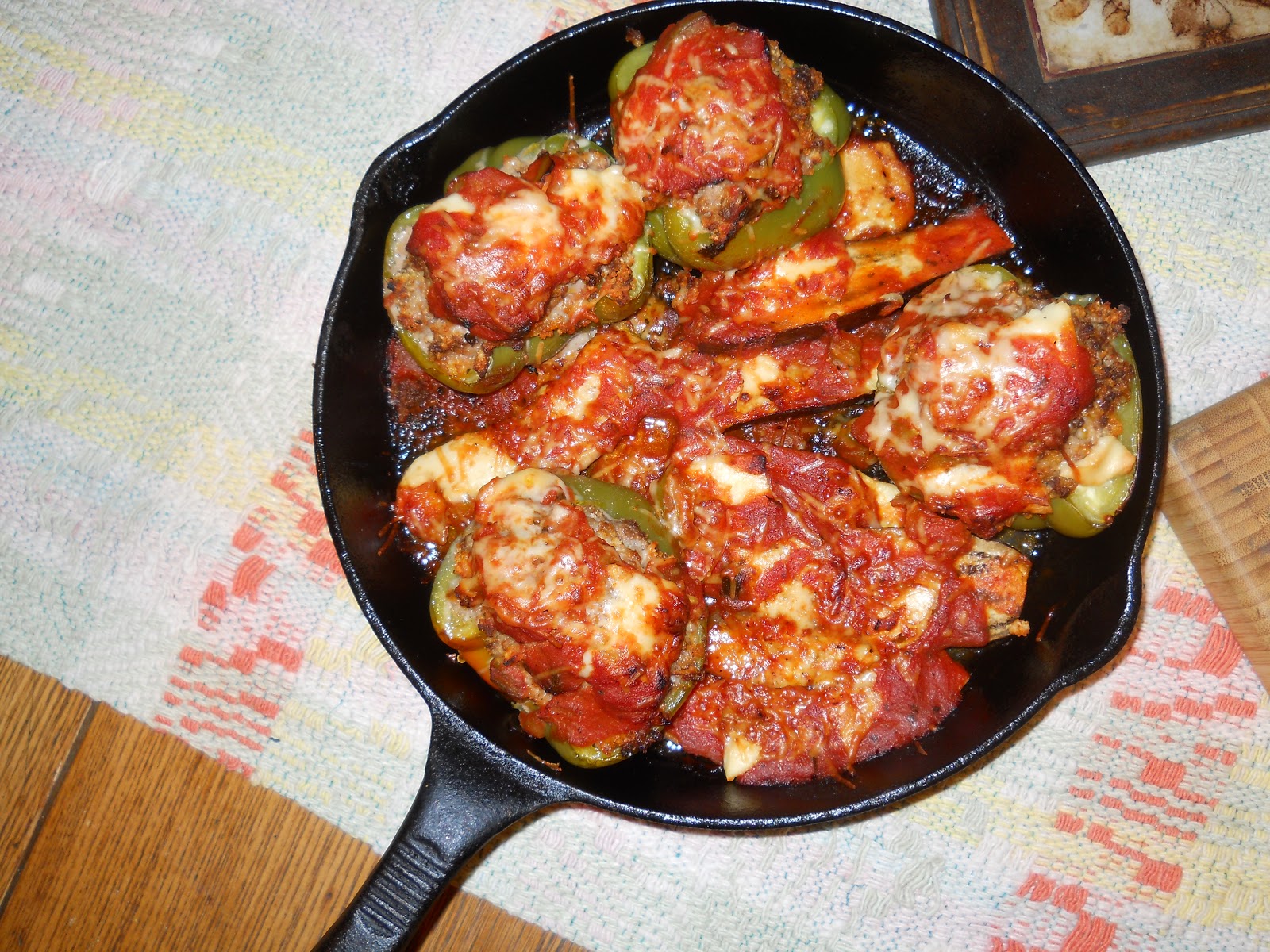
Wow! This is really good. I have an abundance of eggplant in the garden--the long, thin variety--along with tomatoes, basil, green peppers, and onions. So I picked all of them tonight and created this spectacular version of eggplant parmesan. Which is really eggplant parmesan and mozzarella.
This dish typically has eggplant slices dipped in egg and bread crumbs and then sauteed before baking with tomato sauce and the cheeses. I sliced the eggplant into 1/2" long pieces, brushed with olive oil, seasoned with salt and pepper and grilled in my cast iron grill pan (a Christmas present long ago from Perry). Once the eggplant had grill marks and began to soften, I turned them.
While I was doing this, I made a fresh tomato sauce by sauteing onions, green peppers and garlic in olive oil until they began to soften. Then I added 3 cups of fresh, chopped tomatoes and simmered about 25 minutes until it began to thicken. Then added a large handful of chopped basil, salt and pepper and simmered until thick.
In a 8x8" baking pan which I oiled, I added 1/2 c of the sauce, layered with the eggplant, topped with enough freshly grated parmesan to cover the eggplant, then topped with thin slices of fresh mozzarella. Then I did this same layer again--sauce, eggplant, cheeses--and again ending with the tomato sauce.
Into a 350 degree oven for 30 minutes until it was bubbly and beginning to brown. Wow, wow, wow! Never again will I succumb to the traditional version. This is much, much tastier.
Wow! This is really good. I have an abundance of eggplant in the garden--the long, thin variety--along with tomatoes, basil, green peppers, and onions. So I picked all of them tonight and created this spectacular version of eggplant parmesan. Which is really eggplant parmesan and mozzarella.
This dish typically has eggplant slices dipped in egg and bread crumbs and then sauteed before baking with tomato sauce and the cheeses. I sliced the eggplant into 1/2" long pieces, brushed with olive oil, seasoned with salt and pepper and grilled in my cast iron grill pan (a Christmas present long ago from Perry). Once the eggplant had grill marks and began to soften, I turned them.
While I was doing this, I made a fresh tomato sauce by sauteing onions, green peppers and garlic in olive oil until they began to soften. Then I added 3 cups of fresh, chopped tomatoes and simmered about 25 minutes until it began to thicken. Then added a large handful of chopped basil, salt and pepper and simmered until thick.
In a 8x8" baking pan which I oiled, I added 1/2 c of the sauce, layered with the eggplant, topped with enough freshly grated parmesan to cover the eggplant, then topped with thin slices of fresh mozzarella. Then I did this same layer again--sauce, eggplant, cheeses--and again ending with the tomato sauce.
Into a 350 degree oven for 30 minutes until it was bubbly and beginning to brown. Wow, wow, wow! Never again will I succumb to the traditional version. This is much, much tastier.
Thursday, September 2, 2010
Yes, I Can!
By Kathryn Washburn Breighner
Canning is in again. The combination of the economy and the desire for quality food has brought canning back. Not that it ever left in my kitchen. My Mom canned, my Grandmas canned, and so I can.
Canning is easy! All you need are some canning jars, lids and jar rings, a jar lifter, a big pot and some fresh veggies.
So far this week, I've canned:
Dilled Green Tomatoes--3 1/3 c each of vinegar and water, 1/4 c salt brought to a simmer. In hot jars (about 10 minutes simmering in the canner), I added a garlic clove, head of dill, dash of hot paprika and then packed in green tomatoes. I covered them with the hot liquid, wiped off the rim of the jars, topped with a hot lid and rim (brought to a simmer in a pan of water), put the jars in the canning pot and boiled for 10 minutes. A friend gave me a jar of these last summer so this year, I had to do my own. Very tasty.This makes 6 pints.
Green Tomato Chutney--I brought to a simmer about 6 large green tomatoes (about 5 lbs), 1 lb. of green apples, 2 large onions--all chopped--with 1 lb of sugar, 1 1/2 c vinegar, 1/4 c each of yellow raisins and dried cranberries, 1 T cinnamon, 2 t mustard seeds, and 2 t pepper corns. I simmered until thick, about 1 hour, then put in hot pint jars and boiled/canned for 20 minutes. This makes 4 pint jars.
Zucchini Relish--This stuff is great served with kielbasa, pork or hot dogs or as a side dish. Combine 2 c chopped zucchini, 1 c chopped onion, 1/2 c chopped green pepper, 1/4 c red pepper with 2 T salt and cover with cold water and let stand for several hours. Drain, rinse, drain, rinse. Combine 1 1/2 c sugar, 2 teaspoons celery seed, 1 t mustard seed and 1 c cider vinegar and bring to a simmer. Then add the drained veggies and simmer 10 minutes. Pack into hot jars and can for 10 minutes in a boiling water canner. This makes about 5-6 1/2 pints.
Tomatoes--The garden is producing lots of tomatoes from the 90 plants I have in the garden. We are canning tomatoes every 2-3 nights. Tonight I canned 5 quarts which makes 26 total quarts so far. These are so easy and with tomatoes in season right now, everyone should be canning! Last fall, we canned 65 quarts. We use them all year in soups, stews, sauces, and more. It has been years since I bought a can of tomatoes in the grocery store.
Bring a pot of water to boil to blanch the tomatoes. At the same time, bring the canner pot to a boil with quart jars in it to sterilize them. Wash the tomatoes and drop in the boiling water until the skin breaks, 2-3 minutes, then drop into cold water. Remove the skin and pack the tomatoes into the hot jars. Run a knife around the inside of the jar several times to remove any air. Top with 1 t salt and 2 T lemon juice. Add the lids and rims and can for 45 minutes in a hot water bath.
The best sound for a canner is the sound of the lids sealing when you are finished. Success. Next up for me this weekend are bread and butter pickles and pickled beets. It's canning season!
Canning is in again. The combination of the economy and the desire for quality food has brought canning back. Not that it ever left in my kitchen. My Mom canned, my Grandmas canned, and so I can.
Canning is easy! All you need are some canning jars, lids and jar rings, a jar lifter, a big pot and some fresh veggies.
So far this week, I've canned:
Dilled Green Tomatoes--3 1/3 c each of vinegar and water, 1/4 c salt brought to a simmer. In hot jars (about 10 minutes simmering in the canner), I added a garlic clove, head of dill, dash of hot paprika and then packed in green tomatoes. I covered them with the hot liquid, wiped off the rim of the jars, topped with a hot lid and rim (brought to a simmer in a pan of water), put the jars in the canning pot and boiled for 10 minutes. A friend gave me a jar of these last summer so this year, I had to do my own. Very tasty.This makes 6 pints.
Green Tomato Chutney--I brought to a simmer about 6 large green tomatoes (about 5 lbs), 1 lb. of green apples, 2 large onions--all chopped--with 1 lb of sugar, 1 1/2 c vinegar, 1/4 c each of yellow raisins and dried cranberries, 1 T cinnamon, 2 t mustard seeds, and 2 t pepper corns. I simmered until thick, about 1 hour, then put in hot pint jars and boiled/canned for 20 minutes. This makes 4 pint jars.
Zucchini Relish--This stuff is great served with kielbasa, pork or hot dogs or as a side dish. Combine 2 c chopped zucchini, 1 c chopped onion, 1/2 c chopped green pepper, 1/4 c red pepper with 2 T salt and cover with cold water and let stand for several hours. Drain, rinse, drain, rinse. Combine 1 1/2 c sugar, 2 teaspoons celery seed, 1 t mustard seed and 1 c cider vinegar and bring to a simmer. Then add the drained veggies and simmer 10 minutes. Pack into hot jars and can for 10 minutes in a boiling water canner. This makes about 5-6 1/2 pints.
Tomatoes--The garden is producing lots of tomatoes from the 90 plants I have in the garden. We are canning tomatoes every 2-3 nights. Tonight I canned 5 quarts which makes 26 total quarts so far. These are so easy and with tomatoes in season right now, everyone should be canning! Last fall, we canned 65 quarts. We use them all year in soups, stews, sauces, and more. It has been years since I bought a can of tomatoes in the grocery store.
Bring a pot of water to boil to blanch the tomatoes. At the same time, bring the canner pot to a boil with quart jars in it to sterilize them. Wash the tomatoes and drop in the boiling water until the skin breaks, 2-3 minutes, then drop into cold water. Remove the skin and pack the tomatoes into the hot jars. Run a knife around the inside of the jar several times to remove any air. Top with 1 t salt and 2 T lemon juice. Add the lids and rims and can for 45 minutes in a hot water bath.
The best sound for a canner is the sound of the lids sealing when you are finished. Success. Next up for me this weekend are bread and butter pickles and pickled beets. It's canning season!
Monday, August 2, 2010
Trout with Caper Artichoke sauce
By Perry Washburn
On the first real day of Carolyn's vacation (we are hosting visitors at home), we were looking for fast, but good, food. On a late store run, we spied some decent looking trout. Now, what to do with it? I remembered I had an open jar of artichokes in olive oil, and decided to go tart/lemony with the sauce. This was easy, and very, very good.
1 lb trout filets
sea salt
paprika
1/2 cup artichoke hearts in olive oil (chop the hearts, save the oil)
2 Tbs capers, diced
1 Tbs flour
2 Tbs lemon thyme
1 Tbs lemon juice
3 Tbs dry white wine
fresh cracked black pepper
lemon slices
3 Tbs chopped cilantro
I first pulled the artichokes out of the oil, and diced them. After washing and patting dry the fish, I rubbed the filets, cut side and skin side both, with oil from the artichokes. Then sprinkled them with a mixture of sea salt and paprika (I used smoked paprika).
In a small sauce pan, I added 2 Tbs of remaining oil from the artichoke jar, and got it hot. I added a Tbs flour to make a mild roux-like mixture, stirring that for a couple of minutes. To his I added the chopped artichokes, capers, lemon juice, lemon thyme from my herb garden, 3 Tbs dry white wine and black pepper. I brought this to a boil, then reduced the heat and cooked it for a couple of minutes more until it was thickening just a bit.
I grilled the trout, skin side down, until it was almost done, then carefully turned it to brown the cut side. I removed it to a platter, cut it into portions, topped each piece with hot sauce and a liberal dusting of chopped cilantro. Lemon slices garnished the serving platter.
On the first real day of Carolyn's vacation (we are hosting visitors at home), we were looking for fast, but good, food. On a late store run, we spied some decent looking trout. Now, what to do with it? I remembered I had an open jar of artichokes in olive oil, and decided to go tart/lemony with the sauce. This was easy, and very, very good.
1 lb trout filets
sea salt
paprika
1/2 cup artichoke hearts in olive oil (chop the hearts, save the oil)
2 Tbs capers, diced
1 Tbs flour
2 Tbs lemon thyme
1 Tbs lemon juice
3 Tbs dry white wine
fresh cracked black pepper
lemon slices
3 Tbs chopped cilantro
I first pulled the artichokes out of the oil, and diced them. After washing and patting dry the fish, I rubbed the filets, cut side and skin side both, with oil from the artichokes. Then sprinkled them with a mixture of sea salt and paprika (I used smoked paprika).
In a small sauce pan, I added 2 Tbs of remaining oil from the artichoke jar, and got it hot. I added a Tbs flour to make a mild roux-like mixture, stirring that for a couple of minutes. To his I added the chopped artichokes, capers, lemon juice, lemon thyme from my herb garden, 3 Tbs dry white wine and black pepper. I brought this to a boil, then reduced the heat and cooked it for a couple of minutes more until it was thickening just a bit.
I grilled the trout, skin side down, until it was almost done, then carefully turned it to brown the cut side. I removed it to a platter, cut it into portions, topped each piece with hot sauce and a liberal dusting of chopped cilantro. Lemon slices garnished the serving platter.
Subscribe to:
Posts (Atom)